Sign up for the research newsletter; find more learning resources at the links below.
Final Stretch in Book; Unexpected Early Successes of CCP Intelligence; Great China Spy Novels
|
Dear Friends, Greetings: I'm in the final stretch of completing the manuscript for the book, tentatively titled: The Darkest Red Corner: Beijing's Worldwide Espionage and Influence Offensive. I aim to finish the draft in December and send a manuscript to a publisher in January. To mix metaphors, nailing down the story of CCP espionage has been like hacking my way through the jungle, but I see the end in view (or the "light at the end of the tunnel"; apologies to General William Westmoreland). In reporting for this book over the past several years, I've heard some former intelligence officials opine that Beijing's foreign intelligence efforts in the 1950s and 1960s were minimal. While it seems clear that their efforts abroad did not match those of the U.S., the USSR, or Britain in scope or scale, and that the Cultural Revolution caused a rupture, there seems to have been far more to it than met the eye at the time. The 2022 book by the Ariane Knüsel, China's European Headquarters, describes one aspect of this problem. Knüsel shows that Beijing built its embassy in Bern and consulate in Geneva to be an "intelligence hub" for Western Europe during a period when the PRC was not widely recognized as the legitimate government of China, and could not establish diplomatic posts in many countries outside the East Bloc. Their officers at these posts were trained, probably under the supervision of Li Kenong and Zhou Enlai, to fit the "diplomat-agent norm." They backstopped and dispatched "illegal" (non-official cover—"NOC") officers further afield to Europe and beyond, and met with persons willing to become controlled agents—sometimes to illegally acquire controlled technology. It's a fascinating read that I hope will encourage scholars to dig into the activities of China's diplomats in other locations identified by Knüsel as Mao's early intelligence hubs: Sweden, Hong Kong, South Korea, and Indonesia. I would add Macau to that list, where China's intelligence operatives worked "underground" or under what party historians call "semi-public" (半公开) status. In one chapter in the upcoming book, I describe how Portugal's then "overseas territory" was used by China in some of the same ways as Switzerland. All the while, Beijing's activities were at least partially monitored by the Portuguese colonial authorities, who apparently shared at least some of what they knew with the U.S. and UK. Credit for first uncovering this story goes to the great Portuguese scholar of Lisbon's relations with Beijing, Moises Silva Fernandes, in his book Macau, na politica externa chinesa, 1949-1979. Having returned to Australia, I've found a good deal of material about CCP activities here, both historical and contemporary, and concluded that a separate chapter is needed to describe it. Among other things, Chinese diplomats here practice an aggressive form of "subnational" diplomacy to press their demands on local governments and communities in ways that China would find unacceptable on their own soil, as detailed in this article by John Fitzgerald. Meanwhile, the Australian Council for the Promotion of Peaceful Reunification of China (ACPPRC) is active in politics and has been identified by the Attorney General as a Chinese government entity. It has sister organizations in several U.S. cities (that maintain close relations with PRC diplomats) all answering to a similarly named association in Beijing that is subordinate to the CCP United Front Work Department. I cover some of this odyssey in chapters on CCP operations in Europe, China's Asian periphery, and the United States. In case you're interested, I've written two pieces since the last newsletter on the recent evolution of CCP intelligence operations and on China's emerging corps of foreign service nationals. They can be found here. Finally, if you're seeking spy fiction about China, you can't go wrong with Adam Brookes. There is another work that I would like to recommend, called A Map of Betrayal by Ha Jin, the Chinese-born, Chinese-American author. Its fictional spy, Gary Shang, is (very) loosely based on Larry Wu-tai Chin, the famous PRC mole inside the CIA (active 1947-1983). Ha Jin, the author of many works including the amazing novel War Trash, is interviewed about A Map of Betrayal here. Cheers, Matt Non-resident Fellow, The Jamestown Foundation https://www.usni.org/press/books/chinese-communist-espionage |
Just the Facts on Beijing's Espionage Apparatus
Sign up for the research newsletter; find more learning resources at the links below.
Greetings Friends: I’ve consolidated my recent writing and research on Chinese intelligence, technology transfer, and influence operations into a single website: https://www.mattbrazil.com/ The website is intended as a resource for analysts and business leaders dealing with China-related risk and strategy. It includes two new items: a recent white paper presented in Washington, “Gettin’ on Down with Chinese State Security and Public Security". It is an essay about coping with those agencies...
Dear Friends: Book Research News My last newsletter was in February - apologies for being quiet for so long. I'm moving forward with chapters for the book on China's state security structure and activities, and will shortly submit a proposal to a publisher. The revised table of contents includes chapters on: Enemies Within (sound familiar?) Taiwan and the United States as main espionage targets The CCP's use of Hong Kong and Macau Operations in Europe and Asia The Cyber Revolution Research...
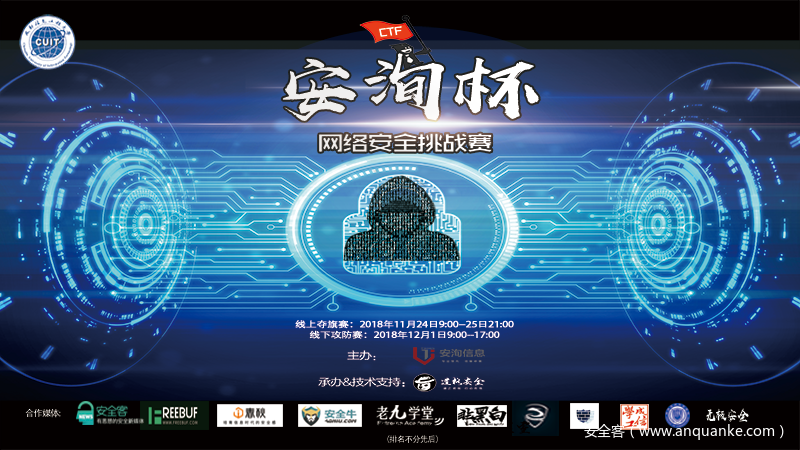
Advertisement for the 2018 "Anxun Cup" hacking competition, jointly hosted by Sichuan Anxun (iS00N) and Chengdu University. Photo credit: iS00N Update That big data leak of 571 files from the hacker firm iS00N had researchers and journalists salivating for five days - but on the sixth day, GitHub, the platform where it was posted, invoked its terms of service to remove it. The biggest leak of data ever from any Chinese hacking organization was replaced overnight on 21-22 February with this...